Roof Replacement Checklist for Pueblo, CO Homeowners
A practical, room-by-room checklist for planning a roof replacement in Pueblo, from container sizing to what to expect on tear-off day.
ReadConstruction guide
How to plan container size and swap-out schedule across a new-construction project's phases in the Pueblo area.
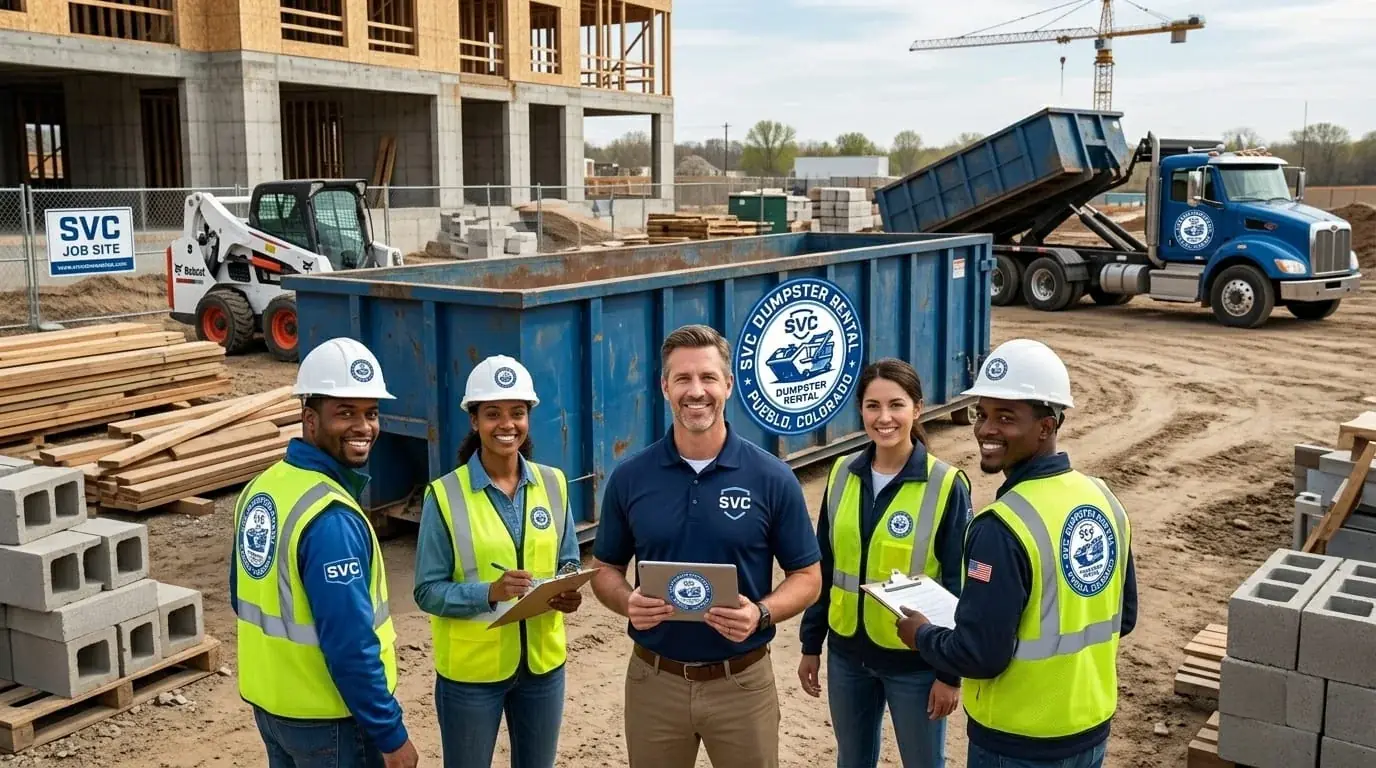
A new-construction project's debris changes character as the build progresses — bulky, relatively light material early, denser material through the middle phases, and lighter finish-stage debris at the end. Sizing and scheduling containers around that reality, rather than guessing once at the start, is the single biggest way to keep debris-removal costs under control on a Pueblo-area build.
Early-stage debris — framing offcuts, packaging material, site-clearing brush — is bulky but relatively light. A 20 or 30 yard container suits this phase well, since you are more likely to run out of room than hit a weight limit.
Once drywall, insulation offcuts and rough plumbing/electrical packaging start accumulating, debris gets noticeably denser. This is often where a smaller container, sized by weight rather than volume, becomes the more cost-effective choice even though it looks like a downgrade.
Flooring tear-out or offcuts, tile debris and cabinetry packaging round out the later stages. Volume tends to drop compared to framing and drywall, so this phase often needs a smaller container or none at all if your swap schedule is already tight.
Rather than committing to one container size for an entire multi-week or multi-month build, propose a swap-out schedule with us based on your build timeline. You can still call ahead of schedule if the job runs faster or slower than planned — the schedule is a starting point, not a fixed contract.
A full container on an active jobsite stops work, which is expensive in crew downtime far beyond the cost of the container itself. We prioritize swap-out calls on construction accounts over new deliveries for exactly that reason — call when it is getting full, not after it has already stopped someone from working.
New-construction sites in Pueblo West and the outlying county communities often sit on gravel or unfinished access roads during the build. Tell us the site condition when you book so we can confirm the truck can get in and out cleanly, and so a container placement does not become an obstacle for other trades working the same site.
Talk to a real person
Call (719) 504-5824 and describe the job. Flat price, stated tonnage allowance, and a delivery window on the same call.
Mon–Sat 7:00am – 7:00pm
From this guide
Usually not. A single large container sized for the whole project either sits mostly empty early or runs out of room later. A scheduled swap-out plan matched to each phase is usually both cheaper and more practical.
Call for a swap before the container is completely full, not after. We prioritize swap-out calls on active construction accounts over new deliveries, and can usually turn one around the same or next day.
Tell us the site condition when you book. New-construction sites in Pueblo West and the outlying communities often run on gravel or unfinished roads, and we will confirm the truck can get in and out cleanly before the delivery date.
Keep reading
A practical, room-by-room checklist for planning a roof replacement in Pueblo, from container sizing to what to expect on tear-off day.
ReadA practical, no-pressure guide to clearing a Pueblo-area home after a loss or a move, room by room.
ReadThe complete sizing guide: how to pick the right container by matching your debris to the two limits that actually matter — volume and weight.
Read