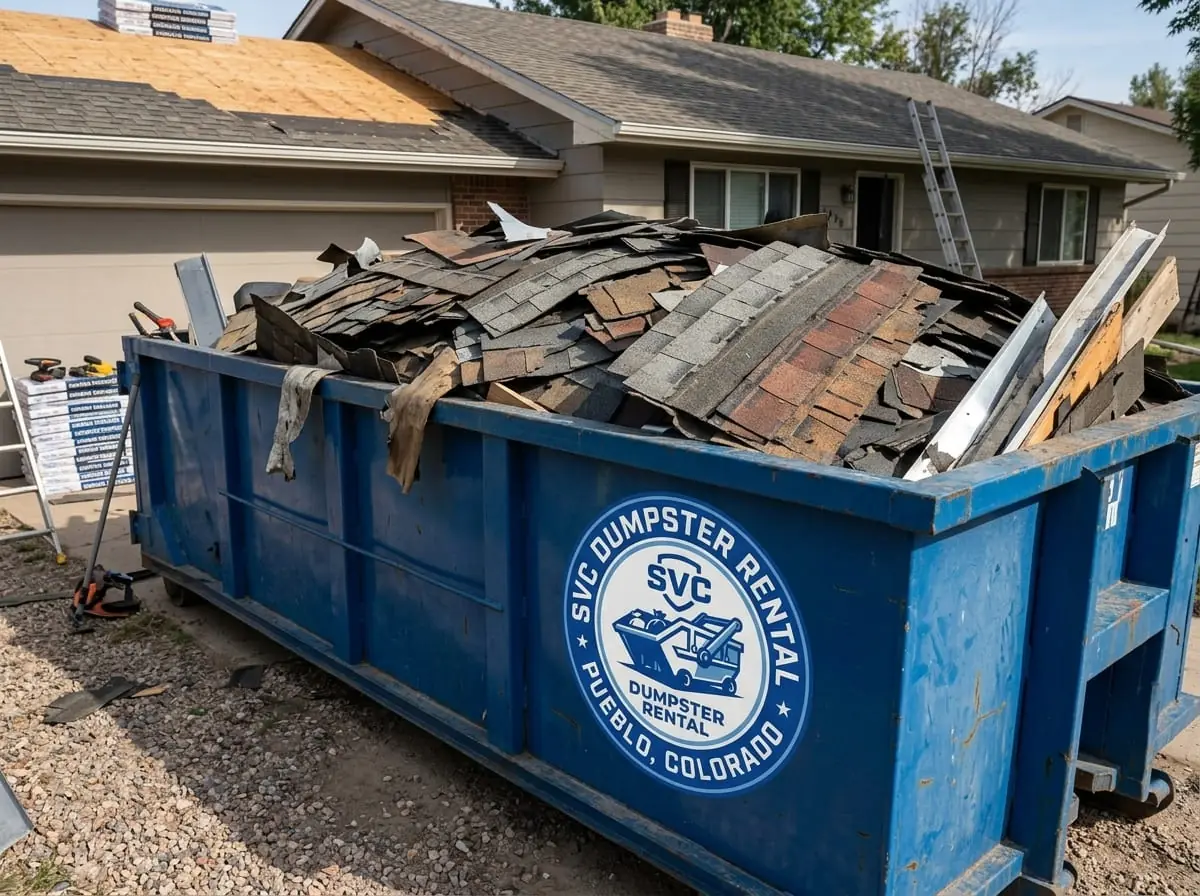
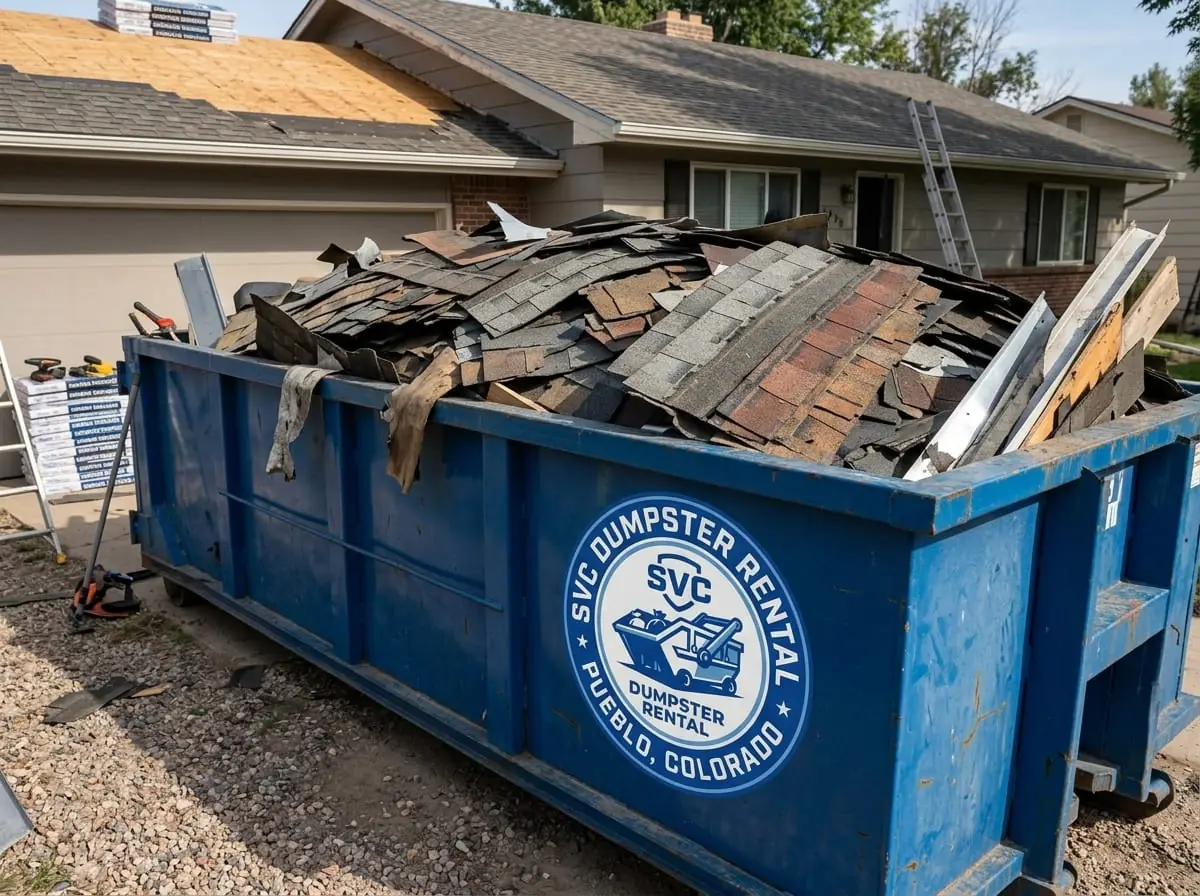
Hailstorm Roof Debris Cleanup: A Pueblo, CO Guide
What actually happens to a roof after a southern-Colorado hailstorm, and how to handle the tear-off debris without slowing down your insurance claim.
ReadSeasonal guide
What defensible-space clearing actually involves around a Pueblo-area home, and why the debris usually needs a container rather than repeated trips to a drop-off.

Wildfire is a real, documented risk across southern Colorado's high-desert and foothill terrain, and defensible-space clearing — thinning and removing vegetation that could carry fire toward a structure — is one of the most effective things a homeowner can do about it. It is also one of our more common seasonal calls, especially for properties in the foothill communities like Beulah and Rye, and on the larger, brush-covered lots around Colorado City and Pueblo West.
Defensible space is the buffer zone of managed vegetation around a structure that slows an approaching fire and gives firefighters room to work safely. It is typically described in zones: the area closest to the house needs the most aggressive clearing — dead vegetation removed entirely, live vegetation thinned and spaced — while zones farther out need less intensive but still real maintenance. Local fire authorities and the Colorado State Forest Service publish specific guidance for southern Colorado's terrain and vegetation types, and it is worth checking their current recommendations for your exact property.
Dead brush, thinned live vegetation, fallen limbs, dead trees or dead sections of live trees, and sometimes old fencing or structures too close to the house all typically come out in one of these projects. It is almost always a volume-driven job rather than a weight-driven one — brush and limbs are bulky but light, especially dry, which is exactly the situation a roll-off container handles well and repeated pickup- truck trips to a green-waste drop-off handle poorly.
Most single-property defensible-space clearings fit comfortably in a 15 or 20 yard container. A larger foothill property with more acreage to clear, or a clearing combined with some tree removal, may need a 30 yard. Because this debris is volume-limited, sizing up rather than worrying about weight is usually the right call — tell us roughly how much vegetation and how large an area, and we will size it correctly.
The best time to do this work is well before the dry, high-risk part of the season, not during it — both because conditions are safer for the work itself and because container demand across the region climbs once wildfire season is underway and everyone is trying to do the same clearing at once. Booking in spring, ahead of the summer dry season, is the ideal window.
If any of the vegetation you are clearing is diseased or invasive, some municipal and county green-waste programs have separate handling requirements to prevent spread — worth checking if that applies to your property. Otherwise, general brush and limb debris can go straight into the container with no special sorting required.
Talk to a real person
Call (719) 504-5824 and describe the job. Flat price, stated tonnage allowance, and a delivery window on the same call.
Mon–Sat 7:00am – 7:00pm
From this guide
It's the buffer zone of thinned, cleared or maintained vegetation immediately around a structure, designed to slow or stop an approaching wildfire and give firefighters room to safely defend the property.
General guidance calls for at least 30 feet of well-maintained space closest to the structure, extending to 100 feet or more depending on slope and surrounding vegetation. Check with local fire authorities for guidance specific to your property.
Most single-property clearings fit a 15 or 20 yard container — this is volume-driven debris (brush and thinned vegetation), not weight-driven, so it fills space well before it fills tonnage.
Keep reading
What actually happens to a roof after a southern-Colorado hailstorm, and how to handle the tear-off debris without slowing down your insurance claim.
ReadHow to plan container size and swap-out schedule across a new-construction project's phases in the Pueblo area.
ReadA practical, room-by-room checklist for planning a roof replacement in Pueblo, from container sizing to what to expect on tear-off day.
Read